


The star has handed over the entirety of his £25,000 Mercury Prize winnings to the trust for venues, which operates to save the Britain's independent music venues.
Fender was awarded the prize on mid-October as his third album People Watching was declared the best record of the previous year.
The musician has chosen to hand the money over to the MVT, in appreciation of the crucial part grassroots venues had in his early career.
"I personally would not have achieved what I am doing today if it wasn't for all the shows I played around the area, and further afield, when I was starting out," stated Fender. "These locations are iconic, but they are facing challenges."
From early 2023 onward, over 150 of these venues have ceased operations – roughly 16% of the entire UK sector.
Recently, well-known musicians like Pulp, Coldplay, Katy Perry and Sheeran have all supported the MVT in its initiatives to support the industry, by including a minor surcharge to their ticket costs, which benefits independent venues.
Fender also participated, collecting more than £100,000 on his live tour to help 38 grassroots venues across England, Scotland, and Wales.
The donation helped locations that were dealing with possible closure due to issues stemming from water damage, fire incidents and bereavements, as well as permit problems, conflicts and neighbor objections.
Additional spaces obtained financial assistance in improving amenities and technical equipment that directly benefitted musicians and audiences.
"The idea that revenue from shows in major spaces supports the smaller venues, where it all starts for performers like me, is just common sense," the star has said.
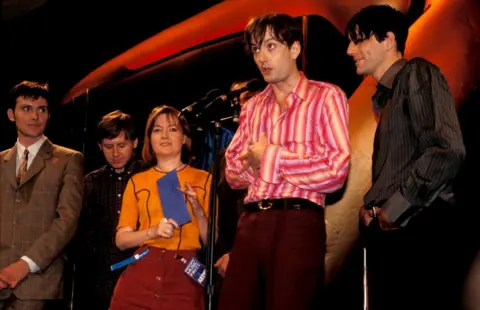
Fender is among several artists to give his Mercury Prize funds to worthy causes.
Back when the band won the trophy in the year 1996 for their release the album, vocalist the singer stated that the group would contribute their winnings to the non-profit War Child.
During 2002, musician the artist split her bounty between a few organizations, including the NSPCC and a charity for Sickle Cell.
"I also contributed a grand to my local community centre, to their classes, because I practiced gymnastics when I was a child and they required updated gear," she explained to a publication.
Two years ago, the band donated their prize money to the local youth club that supported their act, as well as other grassroots music organisations.
And 1994 winners the group contributed their award to a charity for MS after a friend was found to have the illness.
"The victory was quite enough," stated vocalist Heather Small. "The money was the cherry on top but we didn't require the bonus, because we had the honor. So our victory affected the lives of others."
In the past week, the trust shared it had rescued several small stages in that region, by placing them under community ownership.
One venue in the city and the other in the city were acquired under the Own Our Venues initiative, which is backed by a national body and supporters who acquire "stakes" in the venues.


